Green Gigawatt: Future-Proofing AI with ESG and Sustainable Power
Abstract
The accelerating adoption of Artificial Intelligence (AI)—from text generation to image and video synthesis—is transforming global economies, energy infrastructures, and sustainability agendas. As the AI market surges toward a projected value of $1.5 trillion by 2025 (Gartner, 2024), its growing energy appetite demands a profound shift toward green and resilient power. This article explores user behavior driving AI proliferation, the economic and environmental implications of data center expansion, and the emerging solutions—solar, fusion, and intelligent software—to ensure an equitable, sustainable digital future aligned with Environmental, Social, and Governance (ESG) principles.
Introduction
AI-generated text, images, and videos are no longer confined to research labs; they are now integral to everyday consumer and enterprise experiences. From generative chatbots and design tools to AI-driven video synthesis, the end-user behavior fueling this trend reflects a global appetite for faster, personalized, and automated digital experiences. Each request—whether composing an article, generating an image, or editing a video—represents not just computation, but energy consumption and carbon emissions.
A single million-token AI text generation emits carbon equivalent to driving a gas-powered vehicle 5 to 20 miles, while producing one image consumes energy comparable to fully charging a smartphone (MIT Sloan, 2024). This digital demand scales exponentially as millions of users simultaneously engage with AI platforms worldwide.
Economic Expansion and Energy Implications
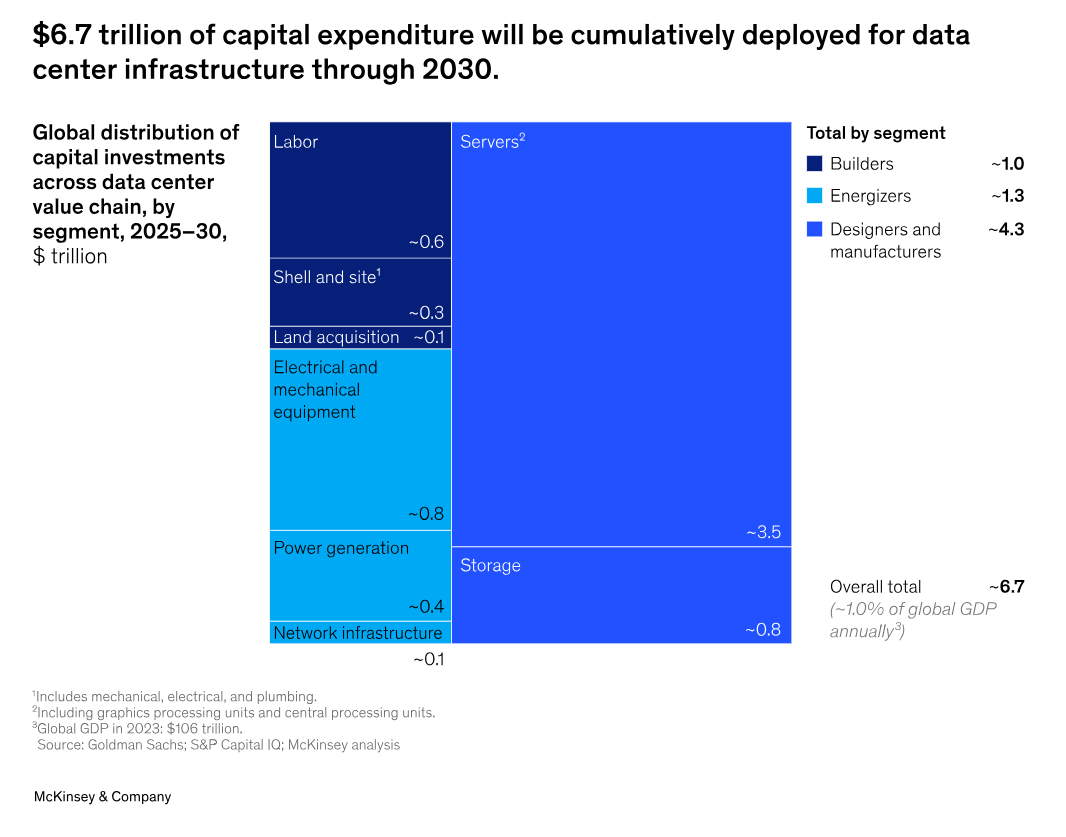
The AI economy is undergoing an unprecedented expansion, growing nearly 50% year-over-year and expected to reach $1.5 trillion in 2025 (Gartner, 2024). This growth is inseparable from the rapid buildout of cloud and hyperscale data centers—the backbone of the AI revolution.
According to Deloitte (2024), data centers currently account for approximately 2% of global electricity consumption, or 536 terawatt-hours (TWh). However, as power-intensive generative AI (gen AI) workloads accelerate, total consumption could double to 1,065 TWh by 2030. The consequence is a looming global challenge: how to sustain exponential digital growth without breaching environmental limits.
Singapore, a model for efficient urban energy management, exemplifies both the opportunity and the strain. National electricity consumption rose 1% in 2023 to 55 TWh, with a projected 2.8%–3.2% annual growth rate for the next decade (SingStat, 2024). The nation’s ambition to power 350,000 households with solar by 2030 and deploy up to 8.6 GWp of solar power by 2050 (EMA, 2023) demonstrates how localized clean energy goals integrate with global AI sustainability targets.
Fusion Energy and the New Industrial Revolution
While renewables such as solar play a crucial role, their intermittent nature limits reliability for the 24/7 energy demands of AI-driven data centers. This gap has catalyzed massive private investment into fusion energy—the same process that powers the sun.
China, for instance, has invested $6.5 billion to commercialize fusion since 2023, dwarfing U.S. efforts (Commonwealth Fusion Systems, 2024). Meanwhile, Google has signed a 200 MW fusion Power Purchase Agreement (PPA) with Commonwealth Fusion Systems (CFS), and OpenAI has expressed intent to purchase fusion energy to power its data centers (DCD, 2024).
Fusion promises clean, safe, and secure energy with net-zero carbon emissions, positioning it as a cornerstone of future ESG-aligned infrastructure. As OpenAI and Nvidia plan a $100 billion AI infrastructure expansion requiring power equivalent to 10 nuclear reactors (Ars Technica, 2024), the case for fusion becomes urgent. Nvidia’s Jensen Huang noted that 10 gigawatts of energy would power 4–5 million GPUs—a scale that only next-generation clean energy can sustain (CNBC, 2024).
Software Solutions: Making AI Carbon-Aware
Hardware alone cannot solve AI’s energy problem. The software layer must evolve to be carbon-aware—capable of intelligently optimizing workloads, reducing unnecessary computation, and aligning operations with renewable availability.
Research at MIT and Northeastern University has produced Clover, an AI system that dynamically adjusts workload timing to match low-carbon energy periods, achieving 80–90% reductions in carbon intensity during testing (MIT Sloan, 2024). Similarly, training speed estimation tools can now predict model accuracy after only 20% of computation, enabling developers to halt non-productive training early and save up to 80% of energy without compromising results.
Moreover, batch APIs and geographic workload shifting—running non-urgent tasks in off-peak hours or low-carbon grids—offer pragmatic strategies for cloud providers to lower emissions while maintaining high performance.
ESG and the Future of Responsible AI Growth
Environmental, Social, and Governance (ESG) frameworks are rapidly becoming core performance indicators for technology enterprises. Companies are expected to not only drive innovation but also ensure transparency in their energy sourcing, carbon footprint, and community impact.
The convergence of AI and ESG represents a new frontier of responsible capitalism. Future-proofing AI’s growth involves aligning technological progress with sustainability commitments through:
-
Energy Diversification – blending solar, natural gas, and fusion to ensure stability and resilience.
-
Smart Infrastructure – using AI-driven energy optimization tools to intelligently manage data center operations.
-
Policy Alignment – adopting ESG reporting standards that reflect carbon accountability and ethical AI deployment.
As nations like Singapore and companies such as Google, Nvidia, and OpenAI embrace these principles, a path emerges toward an AI-powered world that is both profitable and sustainable.
Conclusion
AI’s unprecedented rise marks not only a technological transformation but an environmental inflection point. The same intelligence that generates art, video, and insight must now be applied to energy ethics and planetary stewardship.
From solar farms in Singapore to fusion reactors in Massachusetts, and from carbon-aware scheduling software to ESG-driven governance, the global AI ecosystem is evolving into an intelligent, energy-conscious organism. The challenge—and opportunity—lies in ensuring that the next billion AI interactions are powered not by fossil fuels, but by the ingenuity of sustainable innovation.
References
Commonwealth Fusion Systems. (2023, August 4). China's $6.5 billion fusion program dwarfs U.S. efforts. LinkedIn. https://www.linkedin.com/posts/commonwealth-fusion-systems_cash-scale-and-speed-why-chinas-65-activity-7373752113358716928-9tdo
DCD. (2023, July 21). Google signs 200MW fusion PPA with Commonwealth Fusion Systems. Data Center Dynamics. https://www.datacenterdynamics.com/en/news/google-signs-200mw-fusion-ppa-with-commonwealth-fusion-systems
Deloitte Insights. (2024). Data center sustainability. Deloitte. https://www.deloitte.com/us/en/insights/industry/technology/technology-media-and-telecom-predictions/2025/genai-power-consumption-creates-need-for-more-sustainable-data-centers.html
McKinsey & Company. (2025, October 7). The data center dividend [Chart]. McKinsey & Company. Retrieved from https://www.mckinsey.com/featured-insights/week-in-charts/the-data-center-dividend
EMA. (n.d.). What is the potential of solar energy in Singapore? Energy Market Authority. https://www.ema.gov.sg/resources/faqs/energy-supply/solar/what-is-the-potential-of-solar-energy-in-singapore
JTC. (2023, May 25). Solar vision: The future looks bright for Singapore. JTC. https://www.jtc.gov.sg/about-jtc/news-and-stories/feature-stories/solar-vision-the-future-looks-bright-for-singapore
OpenAI & Nvidia. (2025, September 15). OpenAI and Nvidia’s $100B AI plan will require power equal to 10 nuclear reactors. Ars Technica. https://arstechnica.com/ai/2025/09/openai-and-nvidias-100b-ai-plan-will-require-power-equal-to-10-nuclear-reactors
SingStat. (2023, April 10). Energy and utilities: Electricity consumption statistics. Singapore Department of Statistics. https://www.singstat.gov.sg/publications/reference/ebook/industry/energy-and-utilities
SP Global. (2022, March 22). Singapore's net-zero by 2050 target realistic and technically viable. S&P Global. https://www.spglobal.com/commodity-insights/en/news-research/latest-news/shipping/032222-singapores-net-zero-by-2050-target-realistic-and-technically-viable-government-report
Stanford HAI. (2025, March 2). Economy | The 2025 AI Index Report. Stanford HAI. https://hai.stanford.edu/ai-index/2025-ai-index-report/economy
MIT Sloan. (2024, April 11). AI has high data center energy costs—but there are solutions. MIT Sloan Management Review. https://mitsloan.mit.edu/ideas-made-to-matter/ai-has-high-data-center-energy-costs-there-are-solutions